Dates: February 28 – April 30, 2026
Hours: Monday – Friday | 12–7 PM
Opening: Saturday, February 28 | 12-9PM
In Beirut, more often than not, the grid trembles out of sequence: infrastructures falter and crumble, abandoned plots interrupt the urban fabric, electricity flows in unstable currents, and memory and labor slip out of view. Artists Ayman El Iskandarani and Lara Saab meet within this fragile terrain, with each proposing an inquiry into how extraction and depletion shape what is kept, what is abandoned, and what slowly becomes invisible over time.
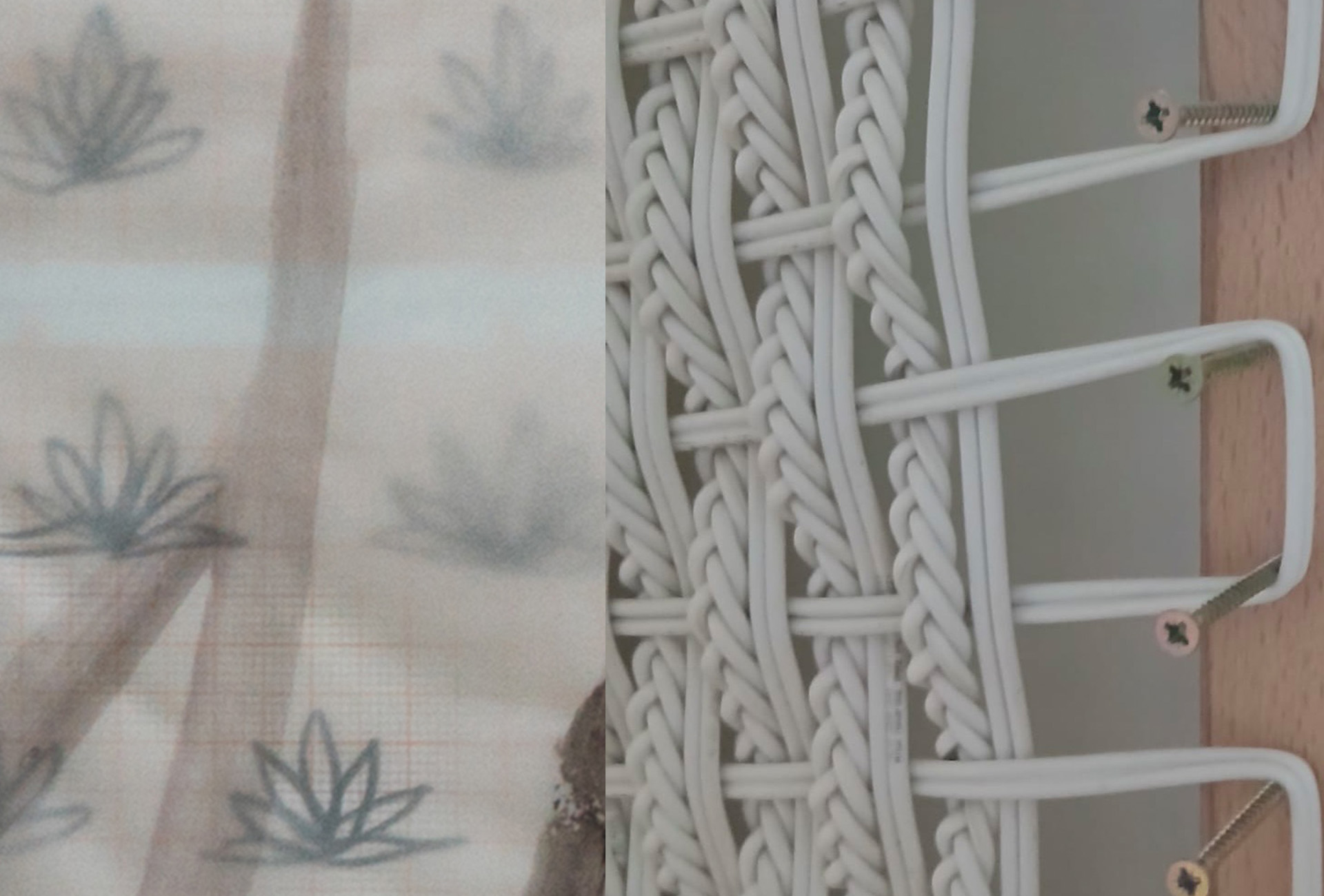
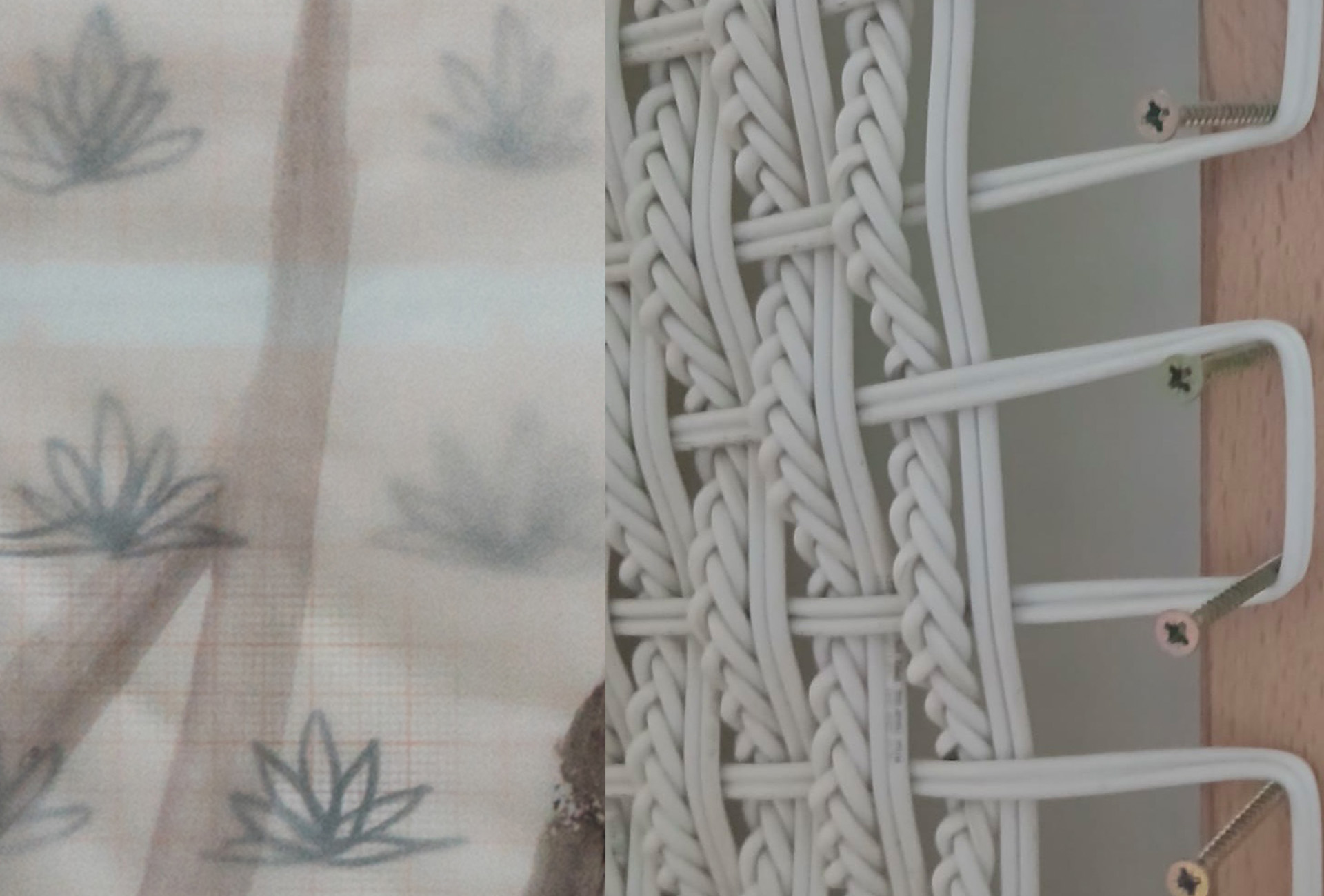
Anthropologist Ann Stoler suggests that when infrastructures break down and cease to function as intended, they become affective. They generate feelings of neglect, of being cast aside, of living amid the debris of promises that were never fulfilled. In a city where power cuts organize the everyday and buildings fall into disuse, broken infrastructures and their attendant landscapes are charged with frustration and endurance; they register histories of failed governance and ongoing processes of abandonment. El Iskandarani’s installation centers on materials that carry energy while concealing the labor that sustains them. Braided electrical wires, stripped of their function, resemble cotton threads and worn fabrics that bear the marks of repeated handling. These materials point to domestic and urban arrangements that require constant maintenance. The installation depicts effort without resolution, forming a scene in which production appears stalled while labor continues in repetitive gestures. Here, wires and threads no longer fully perform the roles assigned to them within human design. Disconnected from the grid or loosened from the fabric they once held together, they turn feral.
Saab’s project turns to the maguey plant, often referred to as agave which is the botanical name introduced through imperial classification. Across Lebanon, she traces how a plant that arrived as an ornamental object has come to flourish in spaces that have fallen into disuse. In neglected sites where maintenance has ceased, magueys bloom and migrate, also becoming feral. The plant can take up to forty years to flower, doing so only once before it dies. The climatic affinities between Lebanon and parts of Central America, such as Mexico, where the plant is native, together with winged pollinators, enable it to take root and spread beyond its intended function. Its presence reveals a relationship between ornament and ownership, as plants that once marked possession slip from human systems and imaginaries when care can no longer be sustained. The global image of nature as passive and in need of intervention is unsettled by local conditions that allow for growth without cultivation. Saab extends this inquiry into the visual realm by revisiting early botanical illustrations that framed plants as objects to be claimed and classified. These images consolidated colonial logics that separated nature from labor and relocated production to distant territories, obscuring the work and land that sustain living matter.
When placed in dialogue, the two projects reveal how extraction operates across scales, from the infrastructure of the home to the circulation of plants, images, and materials. In Beirut, feral effects surface wherever systems falter. Wires, threads, and magueys exceed the purposes once assigned to them. They expose how fragile those purposes were to begin with. By drawing attention to these materials and presences, El Iskandarani and Saab foreground the hidden energies and forgotten labor that structure our homes and city. The artists invite us to reflect on how care persists within conditions of depletion, as we imagine our surroundings anew.